Why do Some Implants Fail and Some Don’t? (Article #58)
This is a subject that many readers may find boring and uninteresting. But for many of the dedicated implant dentists that strive for success for every single one of their cases, this is a subject that holds the highest priority. Of course, the concern for the patient’s overall health and safety always comes first within a dental office, but when it comes down to the focus of the actual treatment itself for dental implant related procedures, the goal is to be providing a specialized service for all our patients with zero issues or problems in mind as the result. Unfortunately, even with this objective in mind, things can still go wrong and potentially lead to the ultimate failure of a dental implant for some. Without further ado, let’s start off right away since there are many reasons why implants could fail, and I’ll try explaining most of them with the limitation of a thousand words for this article.
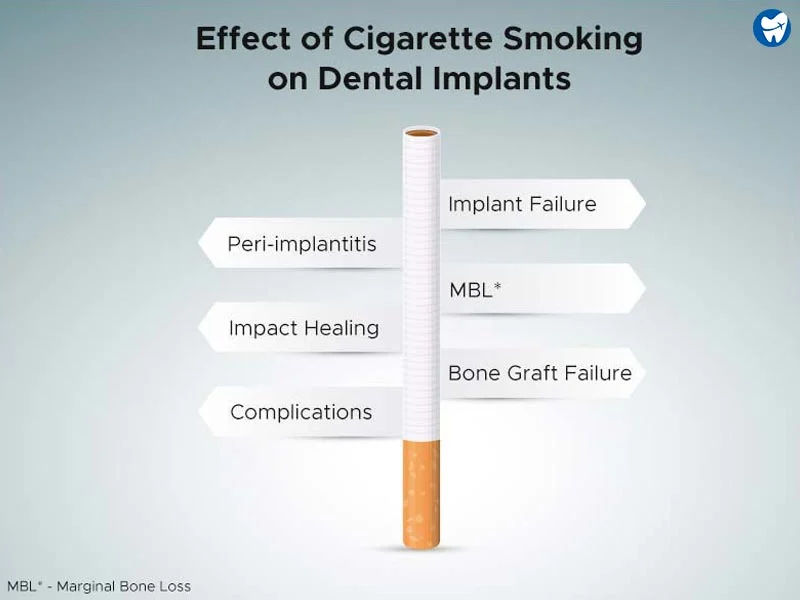
First off, let’s start with the reasons that could be related to the patients. Beginning with the first one and one of the most common reasons for implant failure is caused by smoking. Yes, if people plan on getting implants and they are smokers, then they are at a higher risk of having implant failure. To reduce this risk, they are instructed to cease smoking for at least 2 weeks before and for at least 2 months after their implant procedure. Another reason pertains to how successful the patients are to avoiding the area of the implants during the healing period. They are instructed to not eat on their implants which doesn’t necessarily mean that there must be teeth connected to them for this to occur. The implants could potentially be buried under the gums but if patients are eating on the natural teeth next to them, but excess food particles are inadvertently pressing against the implant underneath the gums, then this could increase the probability of implant failure. Too much movement against the implants affects the healing phase in a negative manner much like planting fence poles into cement that is in the process of drying; if you keep disturbing the fence poles during the curing period, then you might be looking at redoing your whole fence project all over again.
The patient’s own health could also affect the probability of implant failure as well – not only during the healing period, but even afterwards as well. A healthy patient getting implants will have a lower chance of implant failure than compared to a patient that has medical conditions since the normal healing process will be compromised. Another reason, but not at the fault of the patient, could just be an accident that occurs during the healing period. For example, if a patient is active in sports and gets struck accidentally in the mouth with a ball, then the increase for implant failure is heightened. This is especially true for implants with temporary crowns connected to them and since the crowns are exposed in the mouth, they are more susceptible for contact. And so, if a traumatic force is applied to the crowns, this same force magnitude will also be applied to the implants which could be catastrophic.
Some other reasons, but are unrelated to the patients, are related to the treatment itself such as the correct handling of the implant and how the implant is placed. If the implant is accidentally contaminated with bacteria before it is placed, then implant failure will be more likely in the future. In addition, if the implant space was created with high-speed drills without using sufficient water as a coolant, then this could create necrotic bone to which the implant will be placed against. Also, if the implant space is created too small and not made big enough to accommodate the fitting for the implant, then the implant will be succumbed to higher-than-normal compression forces once it is placed. Similarly, if an implant is placed in the bone with insufficient mechanical retention (fitting too loosely), then this is not good either since the implant needs to be somewhat stable within the bone at the bare minimum. Hence, all these reasons could eventually lead to implant failure due to the eventual bone loss or the lack of stability that occurs around the implants.
Another reason pertains to the location, angulation, and depth of the implant when it is placed. Just a small shift into a different position that may not be ideal for the implant could dramatically lead to additional unhealthy forces being placed upon them. These stress factors are undesirable and will cause progressive bone loss that could eventually lead to implant failure. And to dive deeper into this topic, stress factors can be further amplified onto an oral prosthesis if the incorrect number of implants or improper size implants were used or placed. This is analogous to an actual bridge, such as the golden gate bridge, which has two main piers holding up the bridge deck. Now hypothetically speaking, if engineers suddenly removed one of the main piers or reduced the size of the two piers by 50% as an experiment, would you honestly still drive on it? How much more unsafe do you think this will be? Bottom line, this is just not a good feeling to have in the back of your mind and most people, if not all, would be more at ease knowing the fact that their “golden gate bridge” or implant prosthesis is built to last with quality, safety, and longevity in mind.
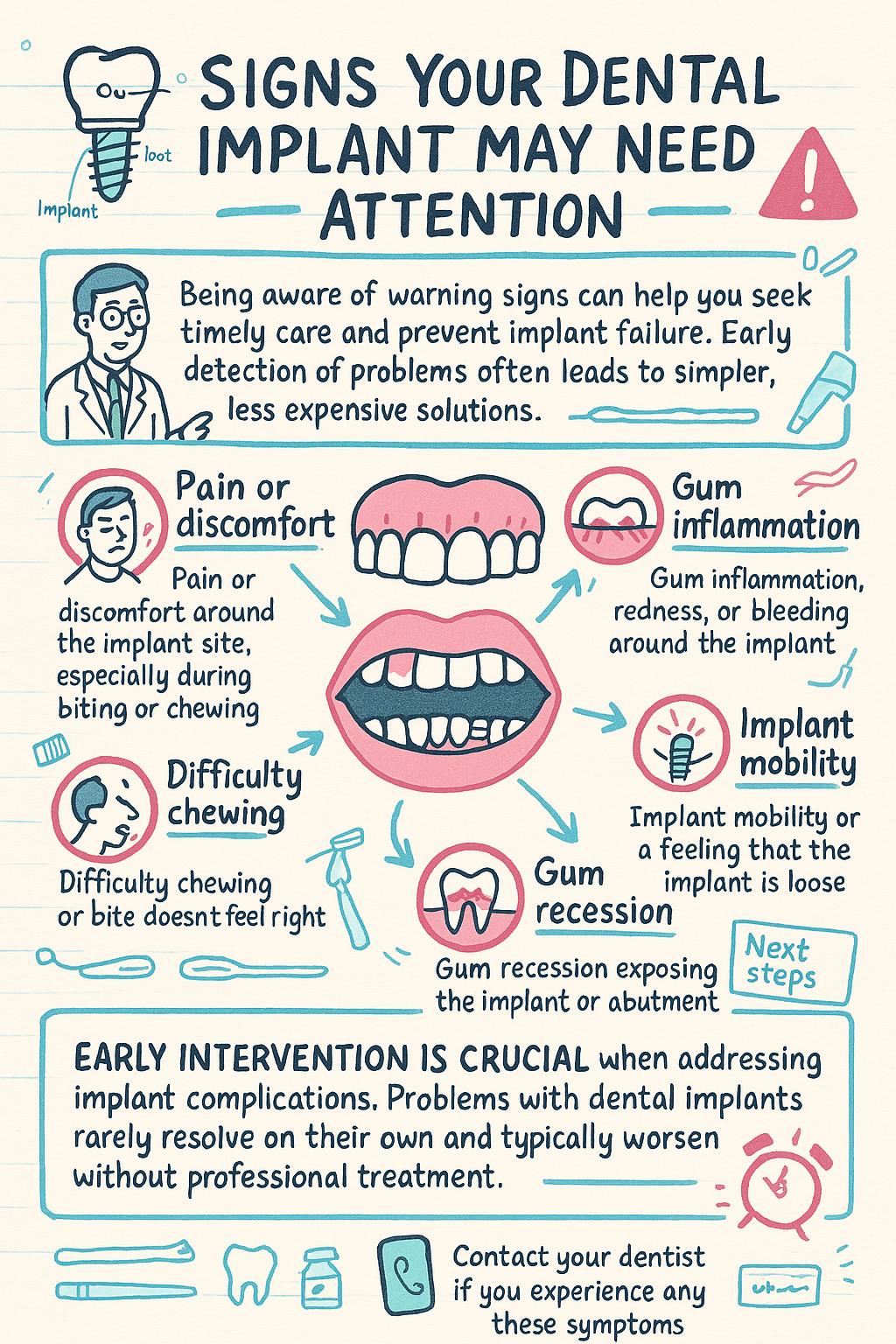
Another reason and probably one of the most important reasons that could lead to implant failure is…inadequate or an absent of proper cleaning. This probably belongs in the second paragraph above, but I purposely included it at the end of my article since most people will remember it better this way. I just cannot stress this enough for people that have implants, enforcing and maintaining proper oral hygiene habits is extremely crucial to keeping them healthy and long-lasting. Much the same way as you must enforce and maintain proper oral hygiene habits with real and natural teeth, you must also treat the implants the same way.

In summary, I have highlighted some of the main reasons why implants fail and some don’t. There are many factors involved, and many others that I did not have the space to write about. All these factors (or reasons), play a role in the cumulative effect directed upon the implant or implants and the final oral prosthesis. A prudent provider will always keep this in mind to eliminate, or at least to minimize, all the possibilities that could lead to implant failure. Remember, the placing of an implant is easily done, much the same way as drilling a masonry screw into a wall. But what could occur afterwards or how long your implant will survive will determine if all facets of oral implantology was applied or not.
Author:
Dr. Charles Chow