When Bone Grafting is absolutely necessary when choosing dental implants as a restorative option.
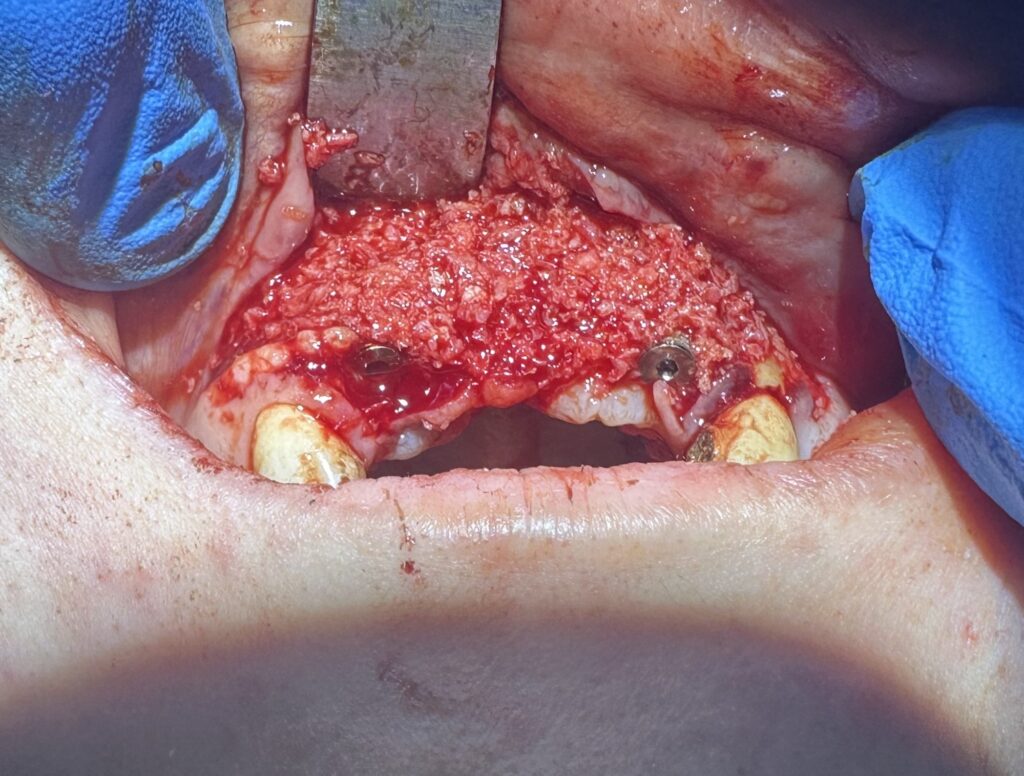
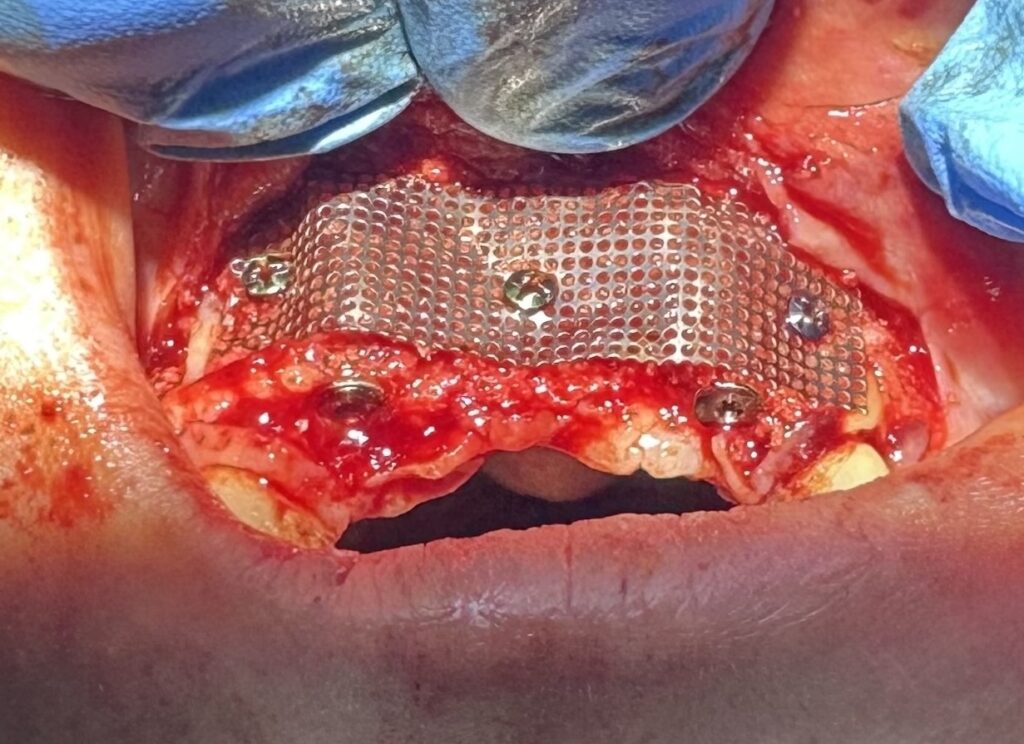
When an individual is missing anterior teeth or teeth in the front of the mouth, it is very disconcerting since this is a highly visible area. But fortunately, there are options that are available to the individual, which would restore this area by providing and placing new “teeth” in the position of the missing teeth accordingly to the individual’s own preference. Generally speaking, when there are teeth missing in the mouth, the restorative options that are currently available are dentures, dental bridges, and dental implants. But for particular situations, more specifically when there are missing teeth that are located in the front section in the upper part of the mouth, the restorative options can potentially become more limited.
In cases when individuals are missing the front teeth in the upper part of the mouths, a dental bridge, may not even be an option, especially when there are too many missing teeth to be replaced. Moreover, the curvature of the bone in this area can also affect this decision. Similarly, a removable partial denture (RPD), which is a type of denture that contains prosthetic teeth that’s made to attach to the existing natural teeth, is another option but is not esthetically desirable to many people. Furthermore, an RPD is removable, which is another popular reason why so many people frown upon it.
The third and last option is the dental implant. This option is considered as the gold standard when it comes to replacing and restoring missing teeth. Just to name a few more examples on why this is so, it does not require the grinding of natural teeth as needed for a dental bridge nor does it appear as artificial or “fake” as most people would perceive for the RPDs. However, both the option and choice to getting dental implants does come with its own requirements. Dental implants require healthy and a sufficient amount of bone in order to anchor and fixate them from within the mouth. If this criteria is not met, then dental implants as a restorative option will not be possible.
In cases when dental implants is desired but there is a severe lack of bone, adjunct procedures can be performed to increase its availability. There are many types of bone augmentation procedures that can be performed to achieve this and therfore, it is the doctor’s preference or at the doctor’s own descretion on which method or technique to use. In a situation when there is a substantial amount of bone that is missing, such as in a 2-wall bony defect (when only 2 bony sides of a tooth site is present), the steps to restoring bone to the remaining 3 sides of missing bone is mandatory. As in the case shown, this is an example of a 2-wall bony defect. Here, the bone exists only at the bottom and at the rear, which would be insufficient and inadequate for the placement of dental implants.
In this case, the method used to restoring the 3 sides with the necessary bone is by guided bone regeneration. Quite simply, this is defined by the designated placement of grafted bone (in this case, an autograft and bone substitute material 70:30 Ratio mixture was used) to the appropriate areas of the native bone and then secured and held in place by various means (in this particular case, a titanium mesh barrier membrane was used). With this method, the doctor is allowed to “guide” the growth of bone into the direction of choice which is a great and popular way to regenerate new bone for the placement of dental implants. The grafted bone is allowed to heal for a specified amount of time before the barrier membrane is finally removed.
Once the bone has healed for an appropriate amount of time, the dental implants can then be connected to an implant prosthesis and become functional and put to use. It is imperative that there is a sufficient amount of bone that’s supporting the dental implants to ensure the overall success and longevity for them. Today’s discussion mainly focused on bone as being one of the criterias but there many others that were not mentioned which are also of great importance in order to achieving longstanding outcomes.
Dr. Charles Chow