Article 30 – “Let’s be clear on this!”
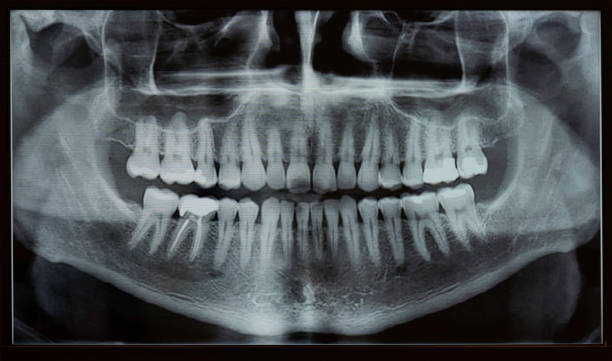
Everyone knows what an x-ray is and everyone that has gone to the dentist is especially familiar with the dental panoramic x-ray which is also known as the orthopantomography x-ray or OPG x-ray for short. The OPG x-ray is an x-ray that captures a 2-dimensional panoramic image of a person’s mouth, but more specify, a person’s teeth and jaw bones. It is perhaps the most taken x-ray in a dental office and possibly the most popular among all the x-ray types. But when it comes to implant surgery where precision is a key requirement, then another type of x-ray needs mentioning – the cone beam computed tomography scan, or CBCT scan for short.
But first, let’s talk about what makes the OPG or panoramic x-ray useful. It offers a “snapshot” or an overall depiction of a person’s mouth. It provides a glimpse of a person’s condition from a dental point of view and helps the provider to rule out pathological diseases, fractures, etc. Additional dental x-rays such as bitewings or periapical radiographs are traditionally taken when a more detailed image is required. This is to provide a more definitive diagnosis such as when teeth decay in between teeth is suspected, as an example. But knowing that additional x-rays other than the OPG x-ray are typically needed is a telling sign that the OPG x-ray does have its limitations. First, this type of x-ray possesses distortions, and it will vary from one image to the other. So, what is measured in the mouth does not normally correlate to the same measurements on the OPG x-ray – it can only be approximated. Regardless of this, the OPG x-ray does provides a general assessment for a person and offers a “general layout” of what each person needs in terms of dental treatment planning.
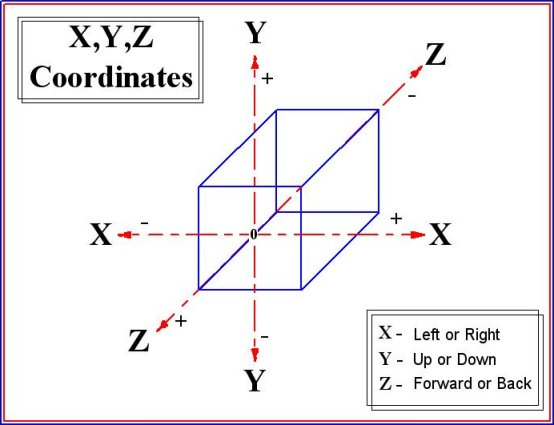
So now, what is a cone beam computed tomography scan? This is essentially a traditional CT scan that we are all aware of, but it is the enhanced and improved version of it. Without going into a lot of detail to comparing the CBCT scan to the CT scan, the CBCT is proven to be far superior since it uses lower radiation dosages and provides more clear and detailed images. In additional to this, these types of scans offer 3-D images unlike the OPG x-ray, which offer only 2-D images. In engineering lingo, this means that for a CBCT scan where it offers 3-D images, you now have a third plane or a z-direction. In a 2-D image, you will only two planes or the x and y directions (“left or right” and “up or down” directions, respectively). Due to the availability of the z-direction, you will have gained an “forward or back” direction which, from the CBCT scan images, allow you to determine the width or thickness of the bone. Conversely, the “left or right” direction allow for the determination of the length of bone while the “up or down” direction allow for the determination of the height of bone. All in all, having and seeing all the 3 dimensions is unquestionably necessary to achieving the most success for the planning, the placement, and the positioning of dental implants. I would often refer to this as the three “P”s when discussing the importance of using the CBCT scan with my patients and that it can quite simply be, “a lot more clear” compared to any other method.
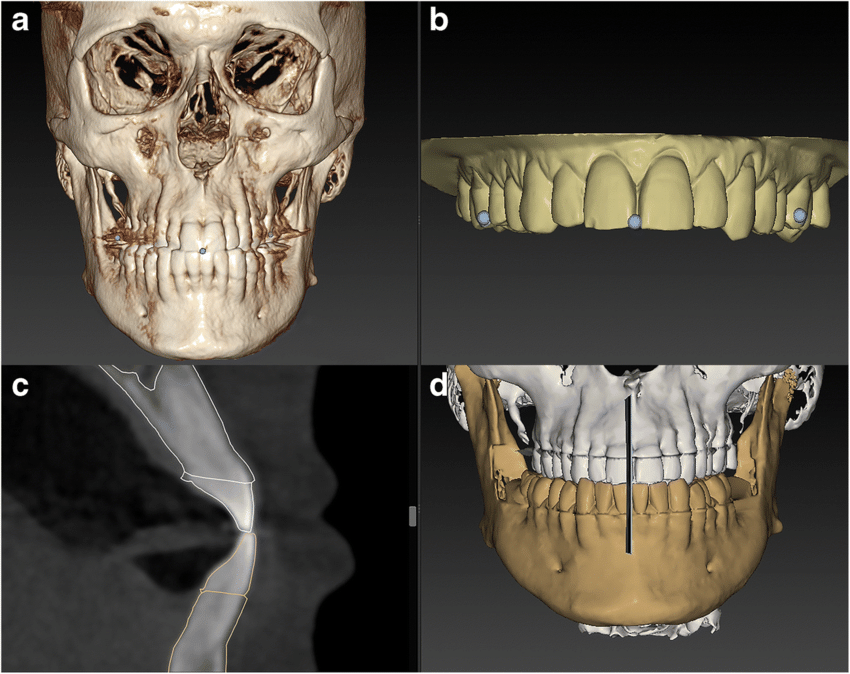
Other advantages of the CBCT scan compared to the OPG x-ray is that the problem with image distortion is almost eliminated. This results in a tremendous increase in accuracy when performing measurements from the CBCT scan images and being assured that they will be correlated correctly to the person’s mouth during surgery. This is further aided with the availability of virtual planning imaging software that is only included with the CBCT scan machine. With the CBCT scan machine, with the features of the images being in 3-D, the images offering the highest clarity available, the images having minimal distortion, and with it including virtual planning imaging software, it has proven to be the most useful aid currently available for any dental provider that is fully committed to placing dental implants successfully.
So, with that said, a CBCT scan is absolutely necessary when it comes to placing dental implants in our dental office. This is especially true for people that has increase bone loss since there will be less bone available for the placement of dental implants where positioning is a crucial factor due to the closer proximity of vital structures such as nerves and blood vessels. Ultimately, a CBCT scan will allow for a more precise and safer workflow environment beginning as early from the dental implant placement to the final fabrication of the oral prosthetic. Unfortunately, there are many people that don’t see the importance of this. I even have had people come to the dental office and had asked for dental implants but does not want to take the CBCT scan or believe in taking any form of any x-rays altogether. Some will even provide a traditional OPG x-ray taken prior at another clinic and wishes to proceed with getting dental implants but without agreeing to getting a CBCT scan since they often think that a OPG x-ray is enough (it really isn’t!). Think of building a house, you can say that the CBCT scan is much like the blueprints for the house. Sure, someone can certainly build a house without having or using blueprints but think of all the possible things that could go wrong without using them. Could you honestly feel comfortable moving into and living in a house that was built by someone that didn’t have or use blueprints for it where nothing was planned out? I don’t know about you, but I certainly cannot! Not having or using a CBCT scan is much the same way.
To summarize, I really hope that by writing this article that more people would be more aware of the significance of a CBCT scan when it comes to wanting and getting dental implants. I like to inform as many people as I possibly can because I know that people aren’t knowingly against dental providers to providing time-proven safety and precision-based practices especially when this is dealing with their own health, they are just unaware or misinformed of what the CBCT scan is and why it is needed and required. Undoubtedly, the objective of taking a CBCT scan is not about accumulating an extra charge or creating a revenue for the dental office. It is mainly for the benefit of the person getting dental implants and its sole purpose is to provide critical safeguards for the entire procedure and to optimize the overall success for the patient.
Author:
Dr. Charles Chow